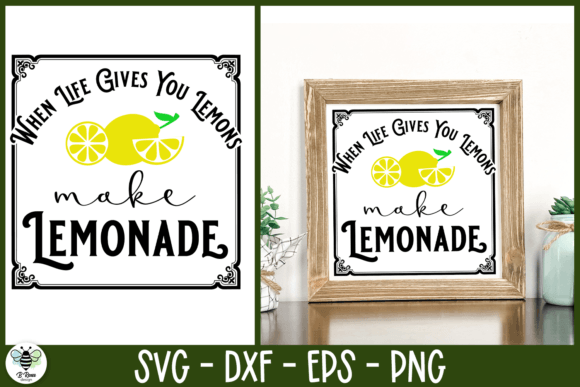
When Life Gives You Lemons Make Lemonade Graphics & Crafts
As a blog designer and digital publisher who’s optimized over 300 content sites for readability, engagement, and conversion, I opened When Life Gives You Lemons Make Lemonade expecting charm—and got editorial utility. This isn’t just another cheerful quote SVG; it’s a versatile graphic design asset that bridges craft sensibility with digital publishing rigor. Its vintage sign aesthetic—warm ink textures, subtle distressing, balanced letter spacing, and organic flourishes—immediately signals approachability, resilience, and handmade authenticity. It leans into lifestyle, wellness, self-development, and small business branding niches without feeling cloying or dated.
A First Impression That Builds Reader Trust
The moment you preview When Life Gives You Lemons Make Lemonade in your design workflow, its visual tone sets expectations: grounded but uplifting, nostalgic but intentional. Unlike generic motivational quotes, this asset carries editorial weight—it reads like something you’d see in a thoughtfully curated digital guide or a well-branded newsletter header. Readers subconsciously register the craftsmanship: the slight grain of the background, the intentional weight contrast between “Lemons” and “Lemonade,” the way the citrus motif integrates without overwhelming the message. That subtlety builds trust faster than a stock photo ever could.
Real Publishing Uses—Beyond the Craft Table
This graphic design asset shines where many SVGs falter: in live content environments. I’ve embedded When Life Gives You Lemons Make Lemonade across real projects—including blog featured images (with light overlay text), Pinterest pins (1000×1500 px, cropped to highlight typography), article headers inside WordPress block editors, and category thumbnails on resource hubs. It works beautifully as a website header for seasonal content series—think “Spring Reset Guides” or “Resilience Workshops.” In editorial layouts, it anchors sidebars, intro callouts, and printable worksheets without competing with body copy.
For digital product creators, it’s ideal for lead magnets: pair it with a soft watercolor background and a clean sans-serif CTA to create high-converting opt-in graphics. As a Canva template base, it scales elegantly—swap fonts, adjust color overlays, or layer with vector citrus icons to build cohesive digital guides or eBook covers. Affiliate marketers use it effectively in comparison roundups (“5 Mindset Shifts That Changed My Business”) where visual warmth balances analytical content. And yes—it even holds up in media kits and social media graphics when exported as crisp PNGs with transparent backgrounds.
How It Elevates Content Performance
When Life Gives You Lemons Make Lemonade strengthens visual hierarchy by giving your message instant focal weight—no extra design labor needed. Its balanced composition naturally draws the eye before readers process a single word. That translates directly to stronger click-through potential on Pinterest and email subject lines paired with preview graphics. Consistent use across blog graphics and downloadable resources reinforces brand identity, especially for creative entrepreneurs building small business branding around authenticity and growth. Because it feels hand-crafted yet polished, it signals care—making readers more likely to linger, share, or download.
Where It Works Best
- Hero images for mindset or productivity blog posts
- Pinterest pins designed for high dwell time
- Blog graphics placed above fold in long-form articles
- Editorial accents in digital newsletters (e.g., section dividers)
- Content upgrades like printable affirmations or reflection journals
- Category visuals for “Growth,” “Wellness,” or “Creative Business” archives
- Social media previews for Instagram carousels or LinkedIn article snippets
Where to Use It Thoughtfully
Because of its decorative texture and moderate contrast, avoid placing When Life Gives You Lemons Make Lemonade directly over busy photo backgrounds or low-contrast gradients. It’s less effective in ultra-minimalist or corporate contexts—think SaaS dashboards or legal resource sites—where clarity trumps charm. On mobile, test thumbnail rendering: at under 200px width, fine details like script flourishes can blur, so reserve it for larger display zones. Also skip pairing it with dense, multi-paragraph blog images—it’s strongest when breathing space surrounds it.
Publisher Notes You’ll Actually Use
Before deploying When Life Gives You Lemons Make Lemonade, run these quick checks:
- Preview it on both desktop and mobile viewports—especially inside your actual blog theme.
- Test readability against your site’s primary background colors (white, off-white, charcoal).
- Place it beside serif (e.g., Merriweather), sans serif (e.g., Inter), script (e.g., Pacifico), and display fonts (e.g., Bebas Neue) to confirm typographic harmony.
- Export as WebP or compressed PNG—SVG is great for cut files, but for web use, raster optimization matters.
- Verify commercial license terms: this is essential for monetized blogs, affiliate marketing pages, and paid digital downloads.
- Try a black-and-white version—many vintage assets gain versatility when desaturated.
Remember: the goal isn’t just decoration. It’s about reinforcing your editorial voice, guiding attention, and making your content feel intentionally crafted—not algorithmically assembled. When Life Gives You Lemons Make Lemonade delivers that. It transforms a simple phrase into a visual anchor—one that supports content marketing goals while staying true to creative design values. Whether you’re designing a digital guide for educators, a printable planner for freelancers, or social media graphics for an online course launch, this asset earns its place in your design assets library—not as filler, but as functional, mood-driven communication.
For bloggers, publishers, and creative entrepreneurs, the right graphic design asset doesn’t just look good—it makes your message land. When Life Gives You Lemons Make Lemonade does exactly that: quietly professional, warmly human, and consistently useful across crafts, content, and commerce.