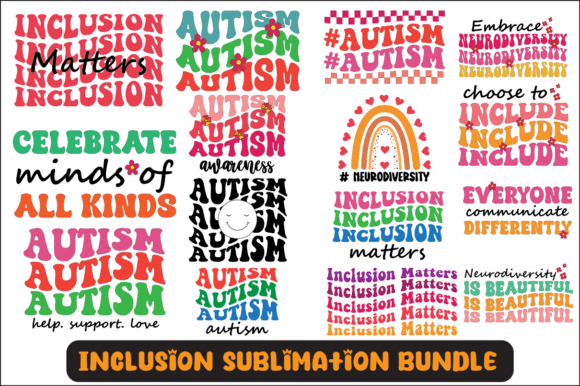
Inclusion SVG Sublimation Design Bundle
First Impressions: Warm, Intentional, and Quietly Powerful
Opening the Inclusion SVG Sublimation Design Bundle, I didn’t see just another clipart-style graphic—I saw a visual tone that lands with quiet sincerity. The shapes are clean but not sterile; the layout breathes without feeling sparse. There’s no forced whimsy or over-designed clutter—just balanced composition, thoughtful spacing, and a gentle emphasis on unity. It reads as inclusive not because it shouts the word, but because its visual rhythm invites connection: soft curves, interlocking elements, and open negative space that suggests room for others. As an embroidery designer who regularly translates digital graphics into stitched texture, my first question is always: Will this hold up when translated into thread? And here—the answer starts promising.
A Real-World Test: Embroidering a Small-Batch Tote for a Local Community Shop
Last week, I used the Inclusion SVG Sublimation Design Bundle to create embroidered canvas totes for a neighborhood co-op’s “Welcome Week” initiative. We needed something uplifting but grounded—no clichés, no visual noise. I chose one of the simpler motifs from the bundle (a circular emblem with layered hands and a subtle leaf motif) and digitized it for machine embroidery at 3.8" wide. On medium-weight natural canvas, with tear-away stabilizer and 40-weight poly thread, the result was cohesive, legible, and tactile—not flat or graphic-like, but distinctly embroidered. Customers responded immediately to the warmth of the design, and several asked where we’d sourced it. That’s the mark of a strong embroidery file: it doesn’t just sit on fabric—it belongs there.
Where This Design Shines in Real Embroidery Projects
- Custom apparel: Works beautifully on crewneck sweatshirts and unisex tees—especially when placed left-chest or centered on the back. The moderate detail level avoids “thread blobbing” on knit fabrics.
- Baby embroidery: Ideal for onesies and burp cloths. Its calm scale and rounded forms read gently against delicate fabric—and stitch cleanly even at 2.5".
- Embroidered patches: Several designs in the bundle lend themselves to clean-edged applique or satin-stitched borders. Just confirm the fill stitch density isn’t too high for your patch backing.
- Holiday and gift embroidery: Think tea towels for Thanksgiving, pillow covers for baby showers, or aprons for small-batch bakeries. The theme feels timeless—not tied to a single season or trend.
- Small shop product branding: Perfect for boutiques or craft fairs wanting subtle, values-aligned identity without loud slogans. Pair it with neutral thread colors for instant cohesion.
Where to Proceed Thoughtfully
This isn’t a one-size-fits-all embroidery file—and that’s a strength, not a flaw. Use discernment in these scenarios:
- Curved surfaces like caps: Avoid motifs with tight internal corners or fine linear details—they’ll distort or lose clarity on structured crowns.
- Thin or stretchy fabric (e.g., lightweight knits): Reinforce with cutaway stabilizer and reduce stitch density if digitizing yourself. Some elements may need slight simplification for stability.
- Dark fabric backgrounds: Test thread color contrast early. Light neutrals (oat, heather grey, warm white) often read better than stark white on charcoal or navy.
- Tiny lettering or micro-details: Not all designs in the bundle include text—but if yours does, verify legibility at your target hoop size. Running stitch outlines help, but avoid sub-1/8" letters for wearables.
- Frequent-wash items (baby clothes, kitchen towels): Prioritize dense satin or fill stitches over delicate openwork. Confirm stitch count aligns with durability needs.
What It Adds to Your Finished Product—Beyond Aesthetics
The Inclusion SVG Sublimation Design Bundle quietly elevates perceived value. Because it avoids trend-driven visuals, it supports long-term brand consistency for Etsy sellers and craft businesses. Customers recognize authenticity—not just decoration—when they see it on a handmade apron or personalized gift. It also builds trust: the design feels intentional, not outsourced or generic. That matters when you’re pricing a $48 embroidered tote or positioning your shop as values-forward. Visually, it balances well with hand-stitched accents, screen-printed companion pieces, or minimalist packaging—never competing, always complementing.
Practical Embroidery Designer Notes Before You Stitch
- Test the design on scrap fabric matching your final substrate—especially for texture and drape.
- Review thread color contrast on both light and dark mockups before cutting into inventory.
- Check stitch density: high fill areas can pucker thin fabrics; consider reducing density by 5–10% if needed.
- Confirm hoop size compatibility—some motifs may require repositioning for standard 4x4 or 5x7 hoops.
- Inspect small details under magnification—what looks crisp on screen may vanish in thread.
- Use proper stabilizer: tear-away for stable wovens, cutaway for knits or lightweight fabrics.
- Verify licensing terms—this is a Graphics product, so confirm whether commercial use of finished embroidered items is permitted.
- If using for digital previews or printable mockups, ensure the SVG renders cleanly at multiple sizes—no pixelation or path errors.
Final Thought: A Design That Serves the Maker—and the Message
As someone who’s digitized hundreds of graphics for real-world embroidery projects, I appreciate when a design respects both the craft and the context. The Inclusion SVG Sublimation Design Bundle does exactly that. It’s not flashy—but it’s reliable, adaptable, and emotionally resonant. Whether you’re stitching a single personalized gift or building a cohesive line of boutique merchandise, it gives you room to express care, clarity, and quiet intention. That’s rare. And honestly? That’s what makes it worth keeping in your working library of machine embroidery design assets.