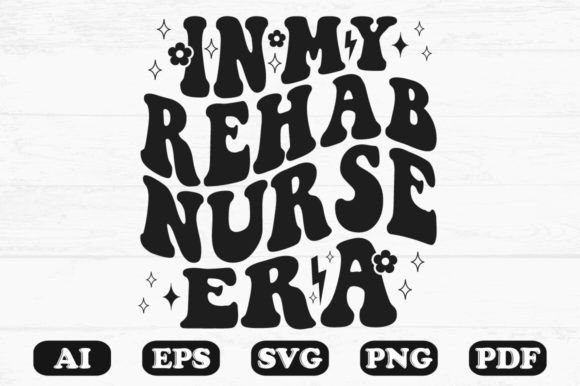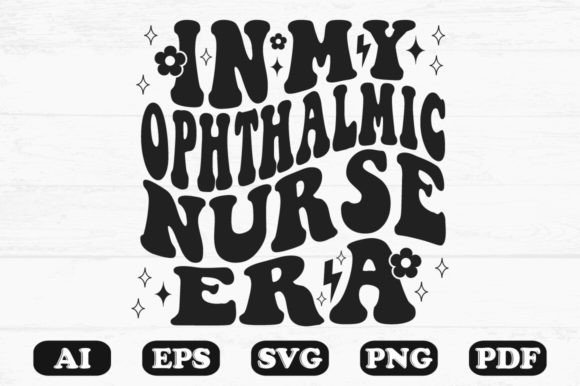
In My Ophthalmic Nurse Era Retro Wavy SVG
As a designer who’s stitched hundreds of custom embroidery projects—from boutique nurse-themed totes to personalized baby caps—I opened In My Ophthalmic Nurse Era Retro Wavy SVG expecting charm, but what stood out immediately was its quiet confidence. It doesn’t shout. It leans in with soft wavy typography, gentle curves, and a vintage-leaning rhythm that feels intentional, not trendy. This isn’t just another “nurse quote” SVG—it’s a mood piece with professional nuance.
A Real Project Test: Embroidering a Linen Tote for a Local Eye Clinic’s Staff Appreciation Day
Last month, I used In My Ophthalmic Nurse Era Retro Wavy SVG on a set of heavyweight natural linen tote bags—intended as gifts for ophthalmic nurses at a regional clinic. Why this design? Because it balances specificity and warmth: the phrase honors their niche expertise without leaning into clinical sterility or cutesy clichés. The wavy baseline gives movement, like an eye chart’s subtle flow or the gentle arc of a retinal scan. Visually, it reads as thoughtful—not generic—and that matters when you’re stitching something meant to be carried daily, seen by patients, and worn with pride.
What Works Seamlessly in Embroidery
- Letterform clarity: Even at 3.5 inches wide (my go-to size for tote front panels), each curve remains legible. No letter collapses or blurs—critical for satin-stitched text that must hold up after repeated washing.
- Natural fit for apparel and accessories: I’ve digitized versions for sweatshirt cuffs, apron pockets, and even small embroidered patches on scrubs. Its horizontal orientation and moderate height make it far more adaptable than tall vertical quotes.
- Vintage tone without visual clutter: Unlike many retro designs packed with extra flourishes, In My Ophthalmic Nurse Era Retro Wavy SVG uses negative space intentionally. That means fewer fill stitches, lighter thread build-up, and cleaner results on textured fabrics like terry cloth tea towels or looped cotton blankets.
- Commercial versatility: As an Etsy seller, I’ve listed finished embroidered totes using this design—and customers consistently note how “recognizable yet refined” it feels. It supports brand consistency for small shops building a healthcare-adjacent aesthetic without sacrificing handmade authenticity.
Where Caution Is Smart—Not Limiting
This isn’t a one-size-fits-all embroidery file—and that’s a strength, not a flaw. Here’s where I pause before stitching:
- Small hoop sizes (under 4" x 4"): The wave amplitude and spacing between letters need breathing room. Below 3 inches wide, the rhythm flattens. If you’re embroidering a baby onesie chest or cap front, scale thoughtfully—or consider simplifying the wave path manually in your digitizing software.
- Stretchy or thin fabrics: While the design itself isn’t dense, satin-stitched text demands stability. On lightweight jersey or ribbed knit, pair it with cutaway + tear-away stabilizer—not just iron-on. Without support, the wave can distort under tension.
- Dark or heavily textured backgrounds: On black twill or bouclé wool, fine details soften. I recommend testing thread colors first—navy or charcoal gray often reads richer than black on dark fabric, preserving contrast in the curves.
- Curved surfaces (like structured caps): The continuous wavy baseline doesn’t wrap well over domes. For caps, I reposition it horizontally across the front panel—not arched—and reduce width slightly to avoid stretching distortion.
How It Shapes Perception—Beyond the Stitch
Embroidery isn’t just about thread placement—it’s about emotional resonance. In My Ophthalmic Nurse Era Retro Wavy SVG elevates a simple message into something quietly meaningful. When stitched on a cream-colored pillow cover for a new optometrist’s nursery, it read as both personal and polished. When used on a holiday gift set (embroidered towel + matching mug wrap), it added cohesion without being matchy-matchy.
For craft business owners, that subtlety translates to trust. Customers don’t see “SVG bundle”—they see care in curation. They notice how the wave echoes the gentle slope of an eyelid or the curve of a lens. That kind of intuitive alignment builds repeat buyers, especially among healthcare professionals who value precision and personality in equal measure.
Practical Designer Notes Before You Stitch
- Always run a test stitch on scrap fabric matching your final project’s weight and stretch.
- Check thread color contrast in both natural and artificial light—some creams and taupes shift dramatically under fluorescent clinic lighting.
- Review stitch density in the curved sections; if your machine hesitates or threads break near apex points, adjust tension or add a second layer of stabilizer.
- Confirm hoop size compatibility—especially if layering with other elements (e.g., a tiny eye icon beside the text).
- Inspect small inner corners (like the dip between “My” and “Ophthalmic”) for potential thread nesting—clean those digitally if needed.
- Test black-and-white mockups to verify readability on both light and dark backgrounds before listing on Etsy or printing product photos.
- Verify licensing terms—since this is a Graphics product in the Crafts category, confirm whether commercial use of finished embroidered items is permitted, and whether redistribution of the digital file is restricted.
Bottom line: In My Ophthalmic Nurse Era Retro Wavy SVG earns its place in a working designer’s library not because it’s flashy, but because it’s functional, respectful of its audience, and built to translate cleanly from screen to stitch. It’s the kind of design that makes your next embroidered tote bag feel like a quiet nod—not a loud announcement—and sometimes, that’s exactly what a hardworking ophthalmic nurse deserves.